


What Is an ERCES System?
When firefighters, police officers, and emergency medical personnel respond to an emergency, reliable radio communication can be the difference between a controlled situation and a dangerous one. Unfortunately, many commercial buildings—especially those constructed with concrete, steel, low-emissivity glass, and other modern materials—can significantly weaken public safety radio signals.
An Emergency Responder Communication Enhancement System (ERCES) is designed to solve this problem by improving radio signal coverage throughout a building. Sometimes referred to as a Bi-Directional Amplifier (BDA) system or Public Safety Distributed Antenna System (DAS), an ERCES ensures that emergency responders can maintain clear, dependable communication wherever they are inside the facility.
For many commercial buildings, these systems are not just recommended—they are required by local building and fire codes following successful radio coverage testing.
Why Reliable Radio Communication Is Critical
During an emergency, first responders often operate in areas where radio signals naturally struggle to penetrate, including:
- Stairwells
- Elevator shafts
- Basements
- Mechanical rooms
- Parking garages
- Interior corridors
- Large healthcare facilities
- High-rise office buildings
If responders lose communication with incident command, valuable time can be lost coordinating evacuations, locating victims, or requesting additional resources. An ERCES system helps eliminate these communication dead zones by strengthening and distributing public safety radio signals throughout the building.
How an ERCES System Works
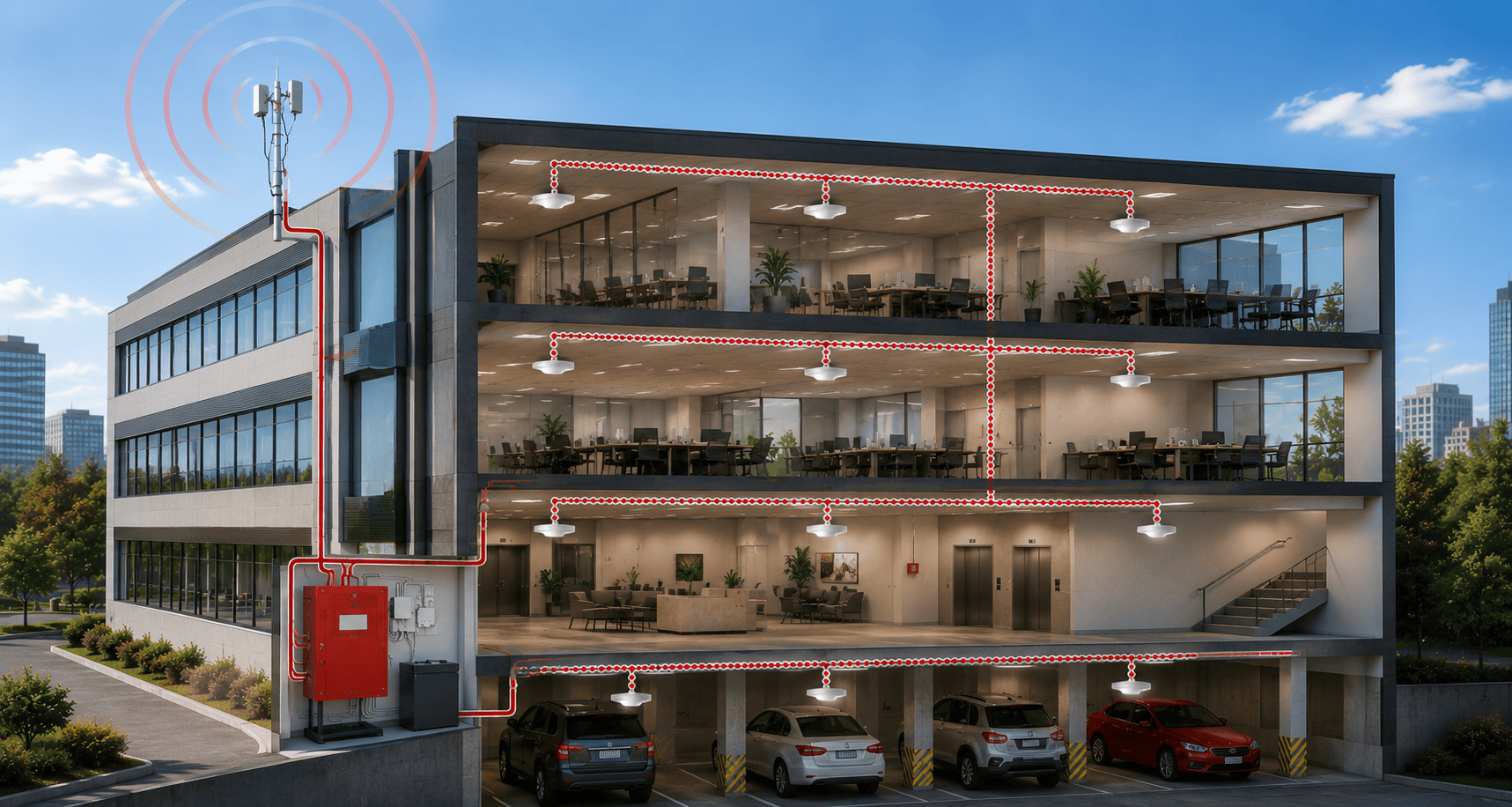
Although the technology behind an ERCES is sophisticated, its purpose is straightforward. The system captures the public safety radio signal from an approved donor antenna installed outside the building. A bi-directional amplifier (BDA) boosts the signal before distributing it through strategically placed indoor antennas, ensuring consistent radio coverage throughout the facility.
The system also works in reverse, allowing radios used inside the building to transmit back to emergency dispatch centers and command personnel outside.
The result is dependable two-way communication between emergency responders regardless of where they are operating inside the structure.
Which Buildings May Require ERCES?
Requirements vary by jurisdiction, but many commercial facilities may require emergency radio coverage testing during construction, renovation, or occupancy changes. Buildings that commonly require ERCES include:
- Hospitals and healthcare facilities
- High-rise office buildings
- Hotels
- Schools and universities
- Manufacturing facilities
- Distribution centers
- Government buildings
- Mixed-use developments
- Parking garages
- Large retail centers
- Data centers
If testing indicates insufficient radio coverage, an ERCES may be required before occupancy approval is granted.
Benefits Beyond Code Compliance
While compliance is often the driving factor, ERCES systems provide benefits that extend far beyond meeting code requirements.
Improved Life Safety – Reliable communication allows emergency responders to coordinate more effectively, improving response times and overall safety for occupants and first responders alike.
Faster Emergency Response – Clear communication helps incident commanders make informed decisions, reducing confusion during critical situations.
Increased Building Value – Installing required life safety systems demonstrates a commitment to occupant protection and helps ensure facilities remain compliant with applicable regulations.
Reduced Future Disruptions – Addressing radio coverage deficiencies during construction or renovation is typically more efficient and less disruptive than retrofitting a building after occupancy.
Key Components of an ERCES System
A typical ERCES installation includes several integrated components working together to deliver reliable radio coverage:
- Exterior donor antenna
- Bi-directional amplifier (BDA)
- Distributed antenna system (DAS)
- Coaxial cable network
- Battery backup system
- System monitoring equipment
- Annunciator panel
- Signal filters and isolation equipment
Each installation is engineered specifically for the building’s construction, layout, and the frequencies used by the local public safety agencies.

Testing and Ongoing Maintenance
Installing an ERCES system is only the beginning. Regular inspections, testing, and preventive maintenance help ensure the system performs properly when it is needed most. A comprehensive maintenance program typically includes:
- Annual system inspections
- Battery testing and replacement
- Amplifier performance verification
- Antenna inspections
- Alarm and supervisory testing
- Signal strength verification
- Documentation for code compliance
Routine service helps identify potential issues before they impact system performance and supports continued compliance with applicable regulations.
Choosing an Experienced ERCES Partner
ERCES systems require specialized expertise in radio frequency engineering, life safety systems, code compliance, and system integration. When selecting a contractor, look for one that can provide:
- Building radio coverage testing
- Complete system design
- Equipment installation
- Authority Having Jurisdiction (AHJ) coordination
- Acceptance testing
- Preventive maintenance
- Emergency service and repairs
- Documentation and compliance support
Working with an experienced partner helps ensure your system is designed correctly, installed efficiently, and maintained for long-term reliability.